Kenyans officially celebrated 50 years of independence on 1st June 2013. The celebrations, which came at a time when the government is working hard to ensure that the Constitution is fully implemented, were graced by President Uhuru Kenyatta and other dignitaries. President Uhuru gave a directive that has since resulted in a dilemma in the political arena. In his speech, the President recalled all Provincial Commissioners (PCs) now known as Regional Commissioners, as well as the heads of other departments in the former provinces for reassignment to other duties. This bid was aimed at restructuring the provincial administration; even as Kenyans look forward to the decentralization of power. This is in accordance with Section 17 of the sixth schedule of the Constitution states that: "Within five years after the effective date, the national government shall restructure the system of administration commonly known as the Provincial Administration to accord with and respect the system of devolved governments established under this Constitution". The President's directive comes at a time when there has already been a battle between the County governors and the County Commissioners, jostling over who wields more influence and which office holds more power. This move has not been spared of opposition and Governors have termed it illegal. Earlier, former president, Mwai Kibaki appointed 47 county commissioners to carry out various national tasks in the already established counties. This was aimed at coordinating the national government functions at the County level. The distinct functions of the commissioners include coordinating security management; coordinating national government functions and delivery of services; facilitating conflict management and peace-building; mobilizing national government agencies for national events, and programs. Consequently, the constitutionality of these appointments was challenged in the High court, as the Court declared the appointments invalid and further deemed the move as unconstitutional, stating that the President cannot make appointments to positions that are nonexistent. However, following an appeal against this decision, the Court of Appeal overturned the High Court's decision and upheld the appointments adding that under Article 6 of the Constitution, former President Mwai Kibaki was obliged to ensure that the services offered by the Provincial Administration were devolved to the 47 counties, pending the enactment of legislation to provide for restructuring of the system. The High Court's revocation of the appointments was ignored and the officers commenced their duties. Rather than frustrating the objects of devolution, top government principals need to uphold the Constitutional spirit behind devolution. There should not be a tussle to achieve partisan interests. The role of the commissioners in the devolved government should be clear-cut and should be in tandem with the Objects of devolution so as to ensure that there is no conflict of interest as we endeavor to realize devolution.
Members of the National Assembly and the Senate have in the past week been embroiled in a heated debate over which of the two Houses was superior to the other. The issue was raised when the Suba MP John Mbadi questioned why the Senate was debating the Division of Revenue Bill, 2013, a Bill which had already been debated and passed by the MPs just a few days before. The MPs, led by Majority Leader Aden Duale felt that the Senate had over stepped their mandate and were trying to assume powers that had not been provided for them in the Constitution. The MPs felt that the Senate had no constitutional mandate to revisit the Bill. The Division of Revenue Bill deals with the amount of money that is to be allocated to the Counties from the National Government.
Rather than being a legal debate, the bitter exchange has degenerated into a political scuffle between the two houses, with both seemingly pushing for personal interests rather than speaking in one voice for the good of the Kenyan people. So what exactly are the two roles of the two houses that comprise the Kenyan Parliament?
National Assembly
According to the Constitution (Article 95), this is the role of the National Assembly.
The National Assembly represents the people of the constituencies and special interests in the National Assembly.
It deliberates on and resolves issues of concern to the people.
It determines the allocation of national revenue between the levels of government,
It appropriates funds for expenditure by the national government and other national State organs
It exercises oversight over national revenue and its expenditure.
It reviews the conduct in office of the President, the Deputy President and other State officers and initiate the process of removing them from office; and
it exercises oversight of State Organs.
The National Assembly is meant to enact legislation, determine the allocation of National Revenue between the different levels of Government. It is meant to oversee the National revenue, expenditure and State Organs. The National Assembly is also meant to approve a declaration of war and extensions of States of Emergency.
Senate
Article 96 (1) provides for the role of the Senate.
The Senate represents the counties, and serves to protect the interests of the counties and their governments.
The Senate participates in the law-making function of Parliament by considering, debating and approving Bills concerning counties.
The Senate determines the allocation of national revenue among counties, and exercises oversight over national revenue allocated to the county governments.
The Senate participates in the oversight of State officers by considering and determining any resolution to remove the President or Deputy President from office.
The Senate is meant to be the backbone of the Counties and its actions will determine the effectiveness of the Devolved Units to deliver services to the people. It is meant to protect the interest of the Counties and their governments in parliament. The Senate will participate in law making, debates and approval of Bills that concern the Counties (Articles 109-113). The Senate will determine the allocation of National Revenue among the Counties (Article 217). It will exercise oversight over the National Revenue allocated to the County Governments. The Senate will also participate in the oversight of State Officers by determining resolutions to remove the President or his Deputy from office (Article 145).
The Battle for Supremacy
The Constitution does not mention which position is above the other. The two-chamber parliament is actually meant to create an appellate hierarchy in the enactment of laws. Basically, one chamber is supposed to be given an opportunity to review the laws and decisions of the other chamber. However, the Senate is restricted to dealing only with Bills concerning Counties while the National Assembly isn't. A Bill concerning Counties can originate from either the Senate or the National Assembly. When such a Bill is passed in either House, the Speaker of the House that passed it shall refer it to the Speaker of the other House. If both Houses pass the Bill in its original form, it's then passed on for Presidential Assent. If the Houses fail to agree on a Bill,
In the case of a special Bill (defined in Article 110), The National Assembly may amend or veto the Special Bill which has been passed by the Senate if it can get a resolution that is supported by at least two thirds of its members. If they fail to get this resolution, the Bill will move on for Presidential Assent.
In the case of an ordinary Bill, if the Bill is amended, it will be referred back to the originating house for reconsideration. If the Bill is rejected, then it will be referred to a mediation committee comprising of an equal number of members from each house who will attempt to develop a version of the Bill that both houses will pass. Each House will then have to vote on whether they accept the amended version. If both Houses agree on the amended version, then it passes through. If either House votes it down, the Bill is defeated. Also, if the mediation committee fails to agree on an amended version of the Bill, then the Bill is defeated as well.
All this information is discussed in Articles 109-113 of the Constitution.
So rather than engaging in a pointless contest, both Houses ought to understand that Devolution is about power sharing with a view of benefiting all Citizens. In accordance with the spirit of the Constitution, there is an expectation of cooperation and a sharing of responsibility between the two Houses. None of them can work in isolation. Partisan interests ought to be laid aside in order to realize the objects of devolution which are clearly provided in the Constitution. Article 174 lists the objects as follows:
to promote democratic and accountable exercise of power;
to foster national unity by recognizing diversity;
to give powers of self-governance to the people and enhance the participation of the people the exercise of the powers of the State and in making decisions affecting them;
to recognize the right of communities to manage their own affairs and to further their development;
to protect and promote the interests and rights of minorities and marginalized communities;
to promote social and economic development and the provision of proximate, easily accessible services throughout Kenya;
to ensure equitable sharing of national and local resources throughout Kenya;
to facilitate the decentralization of State organs, their functions and services, from the capital of Kenya; and
to enhance checks and balances and the separation of powers.
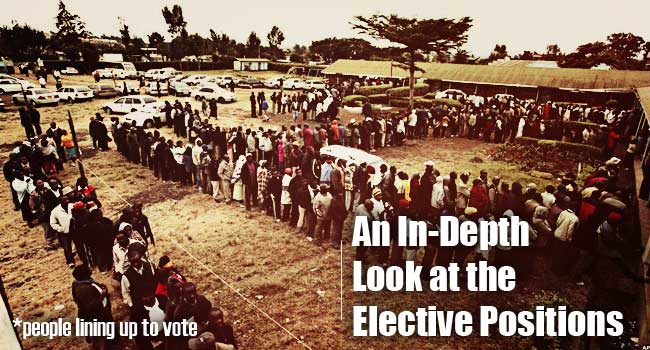
Kenyans on 4th of March, 2013 came out in great numbers to exercise their right to vote as citizens. The electorate conducted themselves in a very peaceful manner as they went to their respective homes immediately after casting their votes to wait for the results. The Chairperson of the Independent Electoral and Boundaries Commission (IEBC) had seven days to announce the results of the election after the day the people cast their votes. The chairman, Issack Hassan on Saturday declared Jubilee coalition candidate Uhuru Kenyatta the winner of the presidential election.
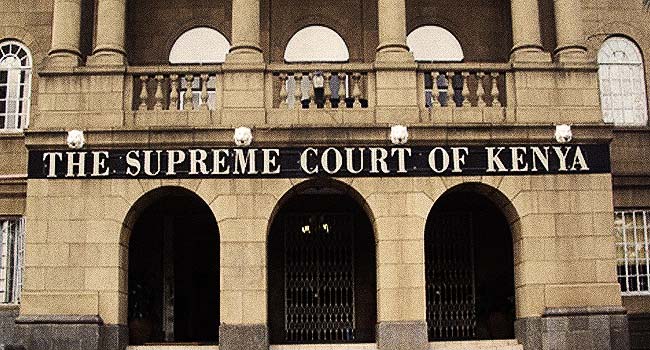
Article 140(1) provides that a person may file a petition in the Supreme Court to challenge the election of the President-elect within seven days after the date of the declaration of the results of the presidential election. Cord's Presidential candidate Raila Odinga, who was second, disputed the results stating that the process was not conducted in a free, fair and credible manner and would therefore challenge it in court. This move showed that politicians and political parties have confidence in the Judiciary to handle electoral disputes. It showed a new maturity in our democratic system, as this was not the case after the 2007 elections. The Supreme Court shall hear and determine the petition within fourteen days after the filing of the petition. The decision of the Supreme Court shall be final. The Supreme Court is prepared to hear any petition that may be filed impartially, fairly, justly and without fear, ill will, favor, prejudice or bias and in accordance with the Constitution and the Laws of the land. If the Supreme Court determines the election of the President-elect to be invalid, a fresh election shall be held within sixty days after the determination. If the court determines and declares the election valid, the president elect shall be sworn in on the first Tuesday following the seventh day after the date on which the court renders a decision declaring the election valid. The Supreme Court comprises of Dr Mutunga who sits as its president, and Judges Philip Tunoi, Jacktone Ojwang', Mohammed Ibrahim, Dr Smokin Wanjala and Njoki Ndung'u as members. Lady Justice Kalpana Rawal, who was recently appointed deputy Chief Justice, has not been sworn in and therefore cannot sit on the bench. The Supreme Court registry will remain open from 7am to 8pm every day to enable any person challenging the presidential election outcome to file their cases. The registrar will have three days to publish the petition while the petitioners will also have three days to serve the respondents after filing. Upon being served, the respondents will have another three days to file and serve their response. On the ninth day after filing the petition, the judges will hold a pre-trial conference during which they will agree on the modalities to be followed during the hearing. The judges will then have two days to hear the petition. It will be a race against time since the judges will have only 14 days from the day the petition is filed to either throw out the petition or nullify the results and call for a fresh election. The patience and upholding of peace that we demonstrated as a people should continue to reign as this process proceeds to court. Let us maintain peace.
There are six elective positions that the electorate will be required to elect leaders come March 4th. This is a new phenomena introduced by the new Constitution. This article will highlight them, describing their functions and roles. They include;
The President
The authority of the President is vested in the Constitution under Article 131. The president is the head of state and government. He is the commander in chief of the armed forces in Kenya and a national symbol of unity. The president exercises the executive authority of the Republic, with the assistance of the Deputy President and Cabinet Secretaries. As we elect the President of this country, he or she should be a person who will;
respect, uphold and safeguard the Constitution;
safeguard the sovereignty of the Republic;
promote and enhance the unity of the nation;
promote respect for the diversity of the people and communities of Kenya; and
ensure the protection of human rights and fundamental freedoms and the rule of law.
The president sits at the cabinet, which is the executive arm of government. The cabinet comprises of the president, the deputy president and cabinet secretaries.
The Member of Parliament
A Member of Parliament represents a constituency. There are 290 constituencies; hence, there will be 290 members of parliament who will sit at the National Assembly. Article 95 of the Constitution provides for the role of the National Assembly. The National Assembly represents the people of the constituencies and special interests in the National Assembly. It deliberates on and resolves issues of concern to the people. The National Assembly also;
determines the allocation of national revenue between the levels of government,
appropriates funds for expenditure by the national government and other national State organs; and
exercises oversight over national revenue and its expenditure.
It is also the mandate of National Assembly to;
review the conduct in office of the President, the Deputy President and other State officers and initiates the process of removing them from office; and
exercises oversight of State organs.
A member of parliament should therefore be a person who has the interests of Kenya at heart. They should be people with good leadership, transparency and integrity. Parliament manifests the diversity of the nation and represents the will of the people. It deliberates on and resolves issues of concern to the people.
A woman representative
There are forty-seven counties. Each county will elect a woman representative who will also sit at the National Assembly. These women should have the interests of Kenyans at heart as the will be making laws concerning the people. They should be accountable and have good governance skills. They should be women of integrity.
Senator
Article 93(1) of the constitution establishes a Parliament of Kenya, which shall consist of the National Assembly and the Senate. The senator sits at the Senate, which is at the National Government. Article 96 (1) provides for the role of the senate.
The Senate represents the counties, and serves to protect the interests of the counties and their governments.
The Senate participates in the law-making function of Parliament by considering, debating and approving Bills concerning counties.
The Senate determines the allocation of national revenue among counties, and exercises oversight over national revenue allocated to the county governments.
The Senate participates in the oversight of State officers by considering and determining any resolution to remove the President or Deputy President from office.
Article 98 (1) provides for the membership of the Senate. It consists of;
forty-seven members each elected by the registered voters of the counties, each county constituting a single member constituency;
sixteen women members who shall be nominated by political parties according to their proportion of members of the Senate elected;
two members, being one man and one woman, representing the youth;
two members, being one man and one woman, representing persons with disabilities; and
the Speaker, who shall be an ex officio member.
Governor
Under the Devolved Government, there shall be a county government for each county, consisting of a county assembly and a county executive. Every county government shall decentralize its functions and the provision of its services to the extent that it is efficient and practicable to do so. The governor is the head of the county. The executive authority of the county is vested in, and exercised by, a county executive committee. The county executive committee consists of;
the county governor and the deputy county governor; and
members appointed by the county governor, with the approval of the assembly, from among persons who are not members of the assembly.
Functions of the county executive committees are provided for under Article 183 of the constitution. The committee shall;
implement county legislation;
implement, within the county, national legislation to the extent that the legislation so requires;
manage and coordinate the functions of the county administration and its departments; and
perform any other functions conferred on it by this Constitution or national legislation.
A county executive committee may prepare proposed legislation for consideration by the county assembly. The county executive committee shall also provide the county assembly with full and regular reports on matters relating to the county. A governor should therefore be a leader who can manage the affairs of a county. He/she should be a person of integrity and have the interest of the people at heart.
Ward representative
A county assembly shall consist of members elected by the registered voters of the wards, each ward constituting a single member constituency, which are known as ward representatives. The legislative authority of a county is vested in, and exercised by, its county assembly. A county assembly may make any laws that are necessary for, or incidental to, the effective performance of the functions and exercise of the powers of the county government. A county assembly, while respecting the principle of the separation of powers, may exercise oversight over the county executive committee and any other county executive organs. A county assembly may also receive and approve plans and policies for;
the management and exploitation of the county's resources; and
the development and management of its infrastructure and institutions.
These should be individuals who will be able to make good laws that will affect the people positively. As the people of Kenya therefore, come March 4th, Let us vote in leaders who have National values and Principles of governance. They should be individuals who have good governance, integrity, transparency, accountability and sustainable development.
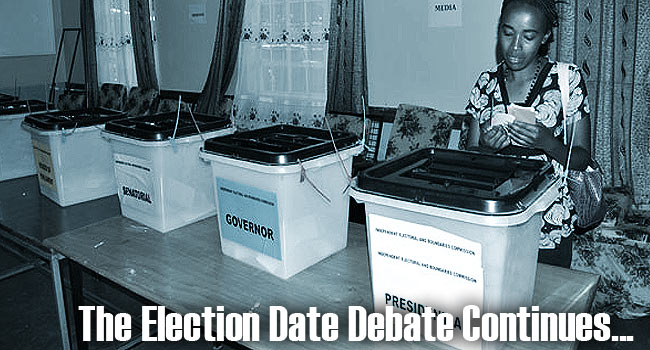
Kenyans are yet to know when exactly the country will hold its next elections. Regardless, several events have occurred that are bringing us closer to knowing the all-important date. The following is an explanation of what has been happening and where we stand on this issue.
The High Court Ruling
Following the heated debate on when elections should be held, the High Court made a ruling based on the authority given to them by the Constitution in Article 165 (3) (d), that says that, they have jurisdiction to hear any question respecting the interpretation of the Constitution including the determination of:
The question of whether any law is inconsistent with or is forbidden by the Constitution.
The question whether anything said to be done under the authority of this Constitution or any law is inconsistent with or is forbidden by this Constitution.
Any matter relating to constitutional powers of any State organs in respect of county governments and any matter relating to the constitutional relationship between the levels of government.
The court ruled that elections be held in March 2013, unless President Mwai Kibaki and Prime Minister Raila Odinga disband the coalition government by the end of October 2012. They were categorical that the dissolution of the coalition government established by the National Accord was a key determinant. The accord states that the coalition government stands dissolved when either of the coalition parties agree in writing or one coalition partner withdraws from the mediated arrangement. If the elections were to be held this year, it will have to be within 60 days after the coalition government has been disbanded. This is according to section 6 of the National Accord and Reconciliation Act. However, if they do not do so then the election date will be subject to the end of the term of the current Parliament which is January 14th 2013, and election shall be held within 60 days after their term ends. This just means that the court ruling was only an interpretation of the law and the final decision on the election date lies in the hands of the two principals. The two principals are under pressure because they are being asked by some parties to dissolve Parliament in October for the elections to be held in December while other parties support the court ruling and want the elections to be held in March 2013.
Presidential Term
Following the High Court ruling, there is a question on whether there will be a political vacuum in case the election is to be held in March 2013, considering the fact that President Mwai Kibaki's term ends on December 31. According to Article 142(1), the President shall hold office for a term beginning on the date on which the President was sworn in, and ending when the person next elected President is sworn in. This in turn means that the President will remain in office until when the newly elected President is sworn in. If on the other hand President Mwai Kibaki resigns from office before the election date, according to article 146 (2)
The Deputy President shall assume office as President for the remainder of the term of the President or,
If the office of the Deputy President is vacant, or he is unable to assume the position, the Speaker of the National Assembly shall act as President and an election to the office of the President shall be held within 60 days after the vacancy arose in the office of the President.
This therefore means there is no possibility of a power vacuum occurring.
Cabinet Bill in Parliament
To add to the election date debate, the Cabinet recently presented a bill in parliament that was seeking to change elections date from the 2nd Tuesday of August to the 3rd Monday of December after every five years. It is still valid and in the event that it is passed, it will not affect the Court ruling made on the elections date that was in accordance with the 6th Schedule of the Constitution of Kenya. This means that the elections will still be held in March 2013 in case the coalition government is not dissolved. However if the bill is passed, it will mean that every other election following the next elections will be held in the month of December after every 5 years. However, if the bill fails to pass, then the month of August will be the official month of elections. It should also be clear that fact that the (2012) elections might be held in March 2013 does not mean that March will now be the official election month. The March 2013 date is a decision was based on when the term of the current Parliament will end.
International Criminal Court is keen on tracing and profiling the assets of the six suspects charged with committing crimes against humanity following the 2007 post election violence. This follows a letter addressed to the Internal Security minister George Saitoti by the ICC Registrar Silvana Arbia asking him to trace, identify and freeze the property of the suspects pending the conclusion of the case. The move is aimed at thwarting the transfer of this property to third parties. This coincides with the recent release by Forbes magazine that listed the Deputy Prime/ Finace Minister Uhuru Kenyatta as the richest Kenyan with fortunes estimated at 50 billion shillings.
Wanted by ICC are deputy Prime Minister Uhuru Kenyatta, Eldoret North MP William Ruto, Tinderet MP Henry Kosgey, Head of Public Service Francis Muthaura, former Police Commissioner Hussein Ali and radio journalist Joshua Sang'.
Under the Rome Statute, once a suspect has been summoned or a warrant of arrest issued, the ICC judges have powers to issue orders freezing the assets and accounts of any suspect at the request of the chief prosecutor.
Article 57 (e) provides that ICC seizure of a suspect's assets or accounts is done as a "protective" measure in case a suspect is convicted and fined and if cash is needed to compensate victims.
Once the suspect is tried and convicted, the judges can issue an order for transfer of such assets into the Victims' Trust Fund for disbursement to victims as reparations. But if the suspect is found innocent, the court must lift the freeze order.
Articles 57 (e) and 58 sets out how the court can issue a warrant while Article 93 compels the government to assist the court in "the identification, tracing and freezing or seizure of proceeds, property and assets and instrumentalities of crimes for the purpose of eventual forfeiture, without prejudice to the rights of bona fide third parties.
Under the International Crimes Act (2008), the government is bound to cooperate with the ICC regarding tracing and seizure of assets owned by ICC suspects.
Article 106 (a) and (b) of the Act states that where the ICC requests assistance in identifying, tracing and freezing, or seizing, any property for the purpose of eventual forfeiture, the Attorney General shall only give authority for the request to proceed only if he is satisfied the request relates to an international crime and the property is or may be located in Kenya.
Article 130 (1) of the provides that "any money or property, including the proceeds of sale of property, recovered as a result of the enforcement under this Part of an order of the ICC shall be transferred to the ICC".
ICC froze the assets and accounts of Congolese rebel leader Jean-Pierre Bemba who is on trial for crimes against humanity and war crimes allegedly committed during the conflict in the Democratic Republic of Congo.
An estimated $6 million (Sh480 million) assets belonging to former Liberian President Charles Taylor held in ten countries in Europe were frozen after a United Nations-backed special war crimes tribunal for Sierra Leone started prosecuting him for war crimes.
Lady Justice Nancy Baraza, the Deputy Chief Justice and the Deputy President of the Supreme Court, is alleged to have assaulted a security guard Ms. Rebecca Kerubo, on New Year's Eve at the Village Market, an upmarket shopping mall in Nairobi. Justice Baraza is accused of drawing a gun on the security guard who was trying to screen her during a routine security check at the entrance. The security checks have become a necessity at malls, hotels, churches and other important buildings because of the on going terror threats which have resulted from Kenya's war against the al shabaab.
In this new constitutional dispensation though, the Deputy Chief Justice is finding the going tough for her as a keen public watches to see whether the new judicial team will resolve this case in an impartial and fair manner – by strictly following the rule of law as stipulated in the constitution. Article 75 of the Constitution clearly that whether in public places, official places, in private or in association with other persons, a state officer shall behave in a manner that avoids demeaning the office the officer holds.
The Police
The Police believe Justice Baraza should face gun charges. Some of the charges they are likely to recommend are unlawful possession of a firearm, illegal use of a firearm and threatening to kill. However, after reviewing the evidence submitted to him by the police, the Director of Public Prosecutions Keriako Tobiko dismissed it claiming that it was not enough to prosecute the Deputy Chief Justice. Mr. Tobiko stated that the case put together by the police was full of gaps, inconsistencies and contradictions. He gave the police seven days to fix it. He further claimed that the CCTV footage of the incident had not been included in the submitted evidence. The office of the Director of Public Prosecutions is concerned with looking at the criminality and charges in the matter while the Judicial Service Commission (JSC) is concerned with alleged professional misconduct.
Before the JSC
The Deputy Chief Justice has already appeared before the Judicial Service Commission (JSC) for questioning. The JSC, according Article 172(1) of the Constitution, paragraph (c), can "appoint, receive complaints against, investigate and remove from office or otherwise discipline registrars, magistrates, other judicial officers and other staff of the Judiciary, in the manner prescribed by an Act of Parliament." According to the constitution, the only action that can be taken by the JSC is to recommend to President Mwai Kibaki that a tribunal be set up to investigate her conduct. So after holding evidentiary hearings and interviewing several material witnesses, the Judicial Service Commission has gone ahead and recommended the suspension of Justice Baraza. The Chief Justice Willy Mutunga on Friday said that the sub-committee he appointed to investigate her conduct had resolved to send a petition pursuant to Article 168 (4) to President Kibaki with a view of suspending her as Deputy CJ and as a judge of the Supreme Court.
If there is no evidence of the Deputy CJ assaulting the guard, she will be cleared. On the other hand, if it is found that she conducted herself inappropriately, she might be requested to honorably resign or face a tribunal. Alternatively, sanctions might be imposed upon her if found guilty and allowed to continue in office.
Removal from Office
Article 168 gives clear stipulations and guidelines that can be used/ applied to remove a Judge of a superior court from office. These are summed up below:
A judge of a superior court may be removed from office only on the grounds of
Inability to perform the functions of office arising from mental or physical incapacitation
Breaching a code of conduct prescribed for judges of the superior courts by an Act of Parliament
Bankruptcy
Incompetence
Gross misconduct or behavior
The removal of a judge may be initiated only by the Judicial Service Commission acting on its own motion, or on a petition given by any person to the Judicial Service Commission.
The petition by a person to the Judicial Service Commission shall be in writing, setting out the alleged facts constituting the grounds for the judge's removal.
The Judicial Service Commission shall consider the petition and send it to the President, if it is satisfied that the petition shows a valid ground for removal.
Within fourteen days of receiving the petition, the President shall suspend the judge from office and acting in accordance with the recommendation of the Judicial Service Commission he shall...
In the case of the Chief Justice, appoint a tribunal consisting of
The Speaker of the National Assembly, as Chairperson
Three superior court judges from common law jurisdictions
One advocate of 15 years standing
Two other persons with experience in public affairs.
In the case of a judge other than the Chief Justice, appoint a tribunal consisting of
A chairperson and three other members from among persons who hold or have held office as a judge of a superior court, or who are qualified to be appointed as such but who, in either case, have not been members of the Judicial Service Commission at any time within the immediately preceding three years
One advocate of fifteen years standing
Two other persons with experience in public affairs
Any judge who is suspended is entitled to continue receiving half their remuneration and benefits until such time as the judge is removed from, or reinstated in, office.
A tribunal appointed under clause shall
Be responsible for the regulation of its proceedings,
Inquire into the matter promptly and report on the facts and make binding recommendations to the President.
A judge who is aggrieved by a decision of the tribunal may appeal against the decision to the Supreme Court, within ten days after the tribunal makes its recommendations.
The President shall act in accordance with the recommendations made by the tribunal.
Conclusion
While some may see Justice Baraza's predicament as an embarrassment to the judiciary, it is nevertheless a test of the spirit of equality of all before the law. Chapter Six of our Constitution deals with leadership and Integrity. This is important because the public needs to have confidence in the constitutional offices. All State officers are constitutionally required to bring honour to their office in both their public and private dealings. This is a crucial test involving the newly appointed Judicial Service Commission, which has been tasked with guiding reforms in the judiciary.
Why is a National Constitution important? The Constitution of a nation is the most important governance document. It is the mother and father of all laws. Any law that is in conflict with the Constitution is null and void. It defines the people, their values and the nation and its destiny. Kenya 's current constitution was written in London with the help of the British colonialist. It is under review to correct past anomalies and ensure justice, fairness and equity for everyone
Why are Christians against Kadhis Courts in the Draft Constitution? Christians are against the inclusion of Kadhis Courts because it is an outright injustice to other religions. Kenya is a multi-religious society! Christians' objections to the inclusion of Kadhi Courts were ignored by the government, the Constitution of Kenya Review Commission, the BOMAS gathering, the Committee of Experts and most recently the Parliamentary Select Committee. Christians are left with no choice but to vote against the new Constitution unless the Courts are removed.
Are Christians against Muslims? No. Christians are not against Muslims. They are against injustice and unfairness in the draft constitution perpetrated by the Government and the review organs.
Why didn't Christians request for Christian Courts? Christians seek for a just society for all Kenyans, not only the rights of Christians. They advocated for an effective executive with an accountable President, an effective Parliament, an efficient judiciary, and respect for the rights and responsibilities that promote an equitable, just and moral values based society. The Constitution must set up a Judiciary that is good for all Kenyans.
How come Kadhis Court was not identified as a contentious issue by the Committee of experts? Christians submitted thousands of memoranda to the Committee of Experts rejecting the inclusion of Kadhis courts in the constitution. The Committee of Experts deliberately refused to identify Kadhis Courts as a contentious issue. Instead, the Committee of Experts that was supposed to be impartial was partisan and openly campaigned for inclusion of Kadhis Courts in the constitution. We now think it was deliberate because Muslims have dominated the Committee of Experts and the Parliamentary Select Committee.
Are there Christian MPs in Parliament who can speak for Christians the way Muslim MPs do? There are Christian members of Parliament, but they have been silent. They have not stood for what is right and just. Church leaders are calling on Christian MPs to stand up and be counted. In future, we urge you as a citizen to vote for those people who will not sit by and watch as our country is sold out. Meanwhile, Christians must organize themselves under the Lords guidance and speak the truth even if MPs fail us.
So what do Christians want? It is not what Christians want but rather what Kenyans want. Kenyans want a constitution that defines how society is organized on the basis of justice, truth, fairness, effective checks and balances, and an effective bill of rights for all Kenyans. With regard to religion, it should be one that provides for freedom of worship to people of all faiths under the Bill of Rights. The Constitution of Kenya must remain neutral with regard to religion, in order to offer equal protection to the people of all religions.
Why are Christians opposed to Kadhis courts yet they have not harmed any body? The fact that the Kadhi Courts did not harm non-Muslims does not mean it was right for them to be included in the Constitution. It was wrong and discriminatory against the people of other faiths from the beginning. Kenyans' patience since independence must not be taken for granted. It is time to correct all wrong things. Muslims should by now be an integral part of the Kenyan community not requiring special treatment or protection! The constitution must not divide the people along religious or other lines. Kenyans want one nation, one land, one law that caters for all irrespective of religious affiliation. This is the practice in stable democracies around the world. We should not let a new constitution to perpetuate past injustices. Christ said: "And no one pours new wine into old wineskins. If he does, the wine will burst the skins, and both the wine and the wineskins will be ruined. No, he pours new wine into new wineskins" (Mark 2:22). Inclusion of Kadhis Courts in the new constitution is like pouring new wine into old wineskins. It will burst the skins.
Who qualifies to be a Kadhi? A Kadhi is a Muslim judge or magistrate. While many claim that the Kadhi is a purely judicial officer who serves in a Kadhis Court , they in Kenya they perform religious functions. The Chief Kadhi declares the beginning of Ramadhan a major Muslim religious festival. As an officer of government, it is discriminatory that, to be a Kadhi, one must profess the MUSLIM RELIGION. This means even if a Christian possesses knowledge of the MUSLIM LAW applicable to any SECTS OF MUSLIMS, he cannot serve as a Kadhi, meanwhile Muslims can preside over cases of non Muslims!
What law does Kadhis Court enforce? Kadhis Courts enforce Islamic law commonly referred to as Sharia. Sharia is the Arabic word where our Kiswahili word Sheria is borrowed from. Sharia is the law system based on the the Koran, the Sunna, older Arabic law systems, parallel traditions, and the work of Muslim scholars over the two first centuries of Islam.
What are the implications of the inclusion of Kadhis Courts in the Constitution? The inclusion of Islamic Sharia courts in the constitution divides Kenyans along religious lines. It would reinforce two classes of Kenyans, Muslims and the rest. Kenyans are seeking a constitution that unites.
Is the draft constitution Christian? No. The draft Constitution is a collection of all just and fair laws from any source where they may be found. It draws from Judeo-Christian principles of equality, fairness, justice and equity. This does not make it Christian! These are values recognized by people from all religions, ethnic communities or professional backgrounds. We as Kenyans do not want a Christian or Muslim or Hindu constitution. We want a Kenyan constitution made by all Kenyans for all Kenyans. Unfortunately, as it is now, the constitution appears to be Islamic! It mentions the word Muslim 6 times, and Kadhis 5 times. It does not mention the word Christian at all!
What have Christians proposed? That the Constitution recognizes every Kenyans freedom of worship. That every Kenyan worships and submits to the religion they choose at their own cost and not government's cost. We appeal that all religious beliefs and practices be left to the Churches, Mosques and Temples where they belong.
Did Jomo Kenyatta agree with the Sultan to entrench Kadhis Court in the constitution? No. Kenyatta undertook to the Sultan of Zanzibar to only preserve the jurisdiction of Kadhis courts. The Kadhi was to operate in the ten mile Coastal strip. While Section 66 of the current constitution provides that the Chief Kadhi and the Kadhis "shall each be empowered to hold a Kadhis court having jurisdiction within the former Protectorate or within such part of the former Protectorate as may be so prescribed", the government violated the constitution and established Kadhis Courts in areas which are outside the ten mile coastal strip like. Christians filed a case in court to challenge this wanton violation of the constitution of Kenya .
If Christians succeed in rejecting the constitution during the referendum, will we not still have Kadhis Courts under the current Constitution any way? Christians are actively involved in this matter and will not stop at a No vote at the referendum. Christians filed a case in the High Court in 2004 to declare Kadhis Court unconstitutional. The hearing ended in February 2009. It is regrettable that time has lapsed and the High Court is yet to deliver the judgment. Christians will next sponsor a motion in Parliament to amend the current constitution to delete section 66 which provides for Kadhis Court .
Should Kenyans reject the draft constitution just because it has Kadhis Courts? Yes. If you had a soda with a small amount of poison, would you drink it? Let us not be deceived by people who either do not have the interest of Kenya at heart or are unable to see divisiveness of this issue. If they are serious and want us to accept the new constitution, let them delete all references to the Kadhis Court in the constitution.
Is it true that the Bill of Rights shall not apply to Muslims? Yes. Muslims are the only Kenyans who are allowed to violate the Bill of Rights. Kenyans should not allow this to happen. Let every Kenyan be equal before the law of the land and particularly the Bill of Rights.
If Christians succeed in rejecting the Kadhis Court, will the Muslims unleash violence? No. Christians and Kenyans in general should not allow themselves to be manipulated and intimidated by the threat of violence. Kenya is a democracy, Muslims must argue with ideas and the ballot box, not violence. In any case, it is hoped that Muslims in Kenya are peace loving and will respect the decision of Kenyans. The threat by some Muslim leaders to secede from Kenya is a matter that the security forces are able to handle.
What about abortion? Abortion is the willful termination of a woman's pregnancy on the basis that it is unwanted. A woman may herself be under pressure because she desires to hide the fact or may be under pressure from other person(s) for the same reasons
When does life begin? Life begins at Conception. All doctors who claim that life begins at birth are professionally untrustworthy, because the fetus in the mother's womb are usually alive. Whenever a fetus dies, it is always an emergency to operate and to remove it.
What do Pro-abortionists want? Their interest is to make money from vulnerable women. In the course of the abortion process the life of the woman is endangered, their conscience and faith are trashed and they become guilty of murder.
What does God say about the life of the unborn? The unborn babies are complete human beings created in the image of God. Any one who aborts them is a murderer. God called Jeremiah in the mother's womb (Jer. 1:4-5). When Mary after she became pregnant met Elizabeth , John leaped in her womb to rejoice at Jesus. (Lk 1:41-44). God commanded that His people in the sixth commandment, 'Thou shalt not kill.' (Ex 20:13) Abortion is murder, the killing of the unborn innocents.
Does anti-abortion law hinder the practice of medicine? No. The constitution allows a doctor, upon medical examination of a pregnant woman, to terminate a pregnancy if the life of the mother faces a medical condition that leads to the death of both mother and baby.
What about Marriage? The Constitution must state that Marriage in Kenya is between two adults of the opposite sex. It must not allow any type of marriage which God calls an abomination. For us as Kenyans, let us pray that God blesses our men and women to form godly and healthy marriages.
What can I do as a Kenyan? As a citizen of this nation you must make your voice heard on these matters! You also need to do the following:
You must read and understand the draft Constitution personally
Petition your Members of Parliament to delete all the sections referring to Kadhis Courts, or that introduce any unacceptable laws in the Constitution.
Register yourself as a voter, and ensure all your friends register as voters. If Kadhis Courts, pro-abortion laws are included in the constitution ensure that all your friends and yourself vote NO at the referendum.
Photocopy this paper and pass it to at least 10 more people in your area.
Pray that God will defeat all the efforts of the people seeking to perpetrate an injustice against Christians and other religions by entrenching the Kadhis Court in the constitution.
Issued by Christian leaders from all Church Denominations, all Umbrella Organizations and all other Christian Organizations in Kenya . These include all Churches and organizations under the NCCK, the KEC, the EAK, the UCCK, and the FEICCK. For comments or further enquiries, contact: This email address is being protected from spambots. You need JavaScript enabled to view it. This e-mail address is being protected from spambots. You need JavaScript enabled to view it or This email address is being protected from spambots. You need JavaScript enabled to view it.
The Independent Electoral and Boundaries Commission (IEBC) has launched boundaries that define the new constituencies. The commission said it would conduct public hearings in all the 47 counties to get Kenyans' views on the boundaries for constituencies and wards. The Commission will also accept emails and written submissions hand delivered to the Constituency Election Coordination Office. Concerns have already started mounting over the report, which is almost a replica of the report prepared by the now defunct Interim Independent Boundaries Review Commission (IIBRC), led by Andrew Ligale.
The IEBC chairman Isaac Hassan explained that the IEBC had to use the IIBRC report as their primary reference point as required by the Constitution and didn't have much choice. The IEBC also used the parliamentary report on the Ligale document as its second reference point.
The report has allocated Rift Valley Province the largest share of new constituencies increasing its parliamentary representation to 76 from 49. Central Province was to get an additional five seats from the current 29. Nairobi was set to double its constituencies from eight while Nyanza got 10 new units, bringing its strength to 41. North Eastern was to increase its MPs from 11 to 18, while the densely populated Eastern Province was to get 8 additional constituencies. Western Province was to get 10 extra constituencies while the Coast Province was to get 5 to bring its representation to 26. This brings the total number of constituencies to 290 up from 210 in line with the provisions of the Constitution of Kenya 2010. Constitutional Provisions
Article 88(4) (a) of the Constitution mandates the IEBC to delimit (draw the boundaries of ) constituencies and wards. Article 89 of the constitution gives lengthy provisions on the delimitation of electoral units. According to paragraph (1) there needs to be two hundred and ninety constituencies set up by the Commission for the purposes of the election of the members of the National Assembly. Below are further constitutional provisions on the same.
The Independent Electoral and Boundaries Commission shall review the names and boundaries of constituencies at intervals of not less than eight years, and not more than twelve years, but any review shall be completed at least twelve months before a general election of members of Parliament.
The Commission shall review the number, names and boundaries of wards periodically.
If a general election is to be held within twelve months after the completion of a review by the Commission, the new boundaries shall not take effect for purposes of that election.
Various considerations were to be given by the IEBC to ensure that they were not inconsistent with the provisions of the law in performing this task. For instance,
The boundaries of each constituency shall be such that the number of inhabitants in the constituency is, as nearly as possible, equal to the population quota, but the number of inhabitants of a constituency may be greater or lesser than the population to take account of—
geographical features and urban centres;
community of interest, historical, economic and cultural ties.
means of communication.
In addition, the number of inhabitants of a constituency or ward may be greater or lesser than the population quota by a margin of not more than forty per cent for cities and sparsely populated areas; and thirty per cent for the other areas. Population quota means the number obtained by dividing the number of inhabitants of Kenya by the number of constituencies or wards, into which Kenya is divided.
In the process of reviewing the constituency and ward boundaries the Commission is to consult all interested parties; and work progressively towards ensuring that the number of inhabitants in each constituency and ward is, as nearly as possible, equal to the population quota.
The Commission is mandated to alter the names and boundaries of constituencies, and the number, names and boundaries of wards where necessary. The names and details of the boundaries of constituencies and wards determined by the Commission shall be published in the Gazette, and shall come into effect on the dissolution of Parliament. However, if dissatisfied by the Commission's decision on this matter, a person may apply to the High Court for review such a decision.
An application for the review of such a decision should be made within thirty days of the publication of the decision in the Gazette and should be heard and determined within three months of the date on which it is filed.
Public contributions can be made either through written submissions that are hand delivered to IEBC offices at the Anniversary Towers in Nairobi, or through entries made to IEBC's website.
After the 21-day period for public participation, the commission will take 14 days to look into any concerns raised before considering them in the final report. The report will then be forwarded to the parliamentary committee on Justice and Legal Affairs, which will again take another 14 days to scrutinize it before presenting it in Parliament. Members of Parliament will then have seven days to debate the report and adopt it with or without amendments after which it will be returned to the IEBC for an extra 14 days before it is gazetted and published.
Hon. Mutula Kilonzo of the Ministry of Justice, National Cohesion and Constitutional Affairs is quoted as indicating that there shall be no extension on these deadlines. This is because they are not only clearly stipulated by the law, but also any delay would mean missing important benchmarks set out in the schedule for the implementation of the Constitution.
The Constitution is the most important governance tool in any country since it is the mother law upon which all the other laws derive their authority and existence. It provides the framework for the rest of the laws to be expanded and derived. It defines the people's most fundamental values, and protects their most cherished freedoms.
What is Constitutional Review
This is the process via which a Constitution is looked over and amended. Because of its very nature as a Mother Law, the Constitution is the most difficult of all laws to amend. Other laws can be changed with a simple majority in parliament, after a motion tabled by a single member of parliament, and debated by the MPs in the House.
Quorum for a session is 40 MPs, so if a majority of 40 MPs in the House are agreeable, a law can be changed. A constitution needs to have 67% of ALL members of parliament in agreement for it to change. This is how the repeal of section 2A that got rid of one party state was done and the subsequent introduction of multi party politics in Kenya was introduced. However, the process now is not just for one section, it is a complete overhaul of the Constitution,
seeking to right all that we have found to be wrong with the constitution since we started using it in 1963 to date. This wider overhaul requires that ordinary Kenyans do participate, so that the values they hold dear can be protected by the Mother Law. Since all law MUST conform to the constitution, it in turn means that parliament cannot enact any laws that go against the Mother Law.
Why do Kenyans oppose issues in the constitution?
Many people have voiced their opinions in regards to the Constitution review. Among those are some sectarian views that are not the core values that Kenyans embrace. Kenya is an African society, whose strength is found in strong families, high standards of morality, with an acute sense of right and wrong. There are things that have never been a part of our African society, and if allowed to permeate, will erode the nature of Kenyan society, and introduce values that are foreign to us. We need to be sure that even after we are gone, our future generations will hold dear that which has made Kenyans who they are.